
The Opportunities We Don’t Always See
Some forms of exclusion are obvious. Others happen quietly, in moments that seem too ordinary to matter.
For our TAIMI researcher, Linyu, that realization began with two very different experiences: being a Chinese student in Europe, and later listening to employees describe their everyday experiences inside a multinational company.
During her master’s studies in Europe, she experienced exclusion herself. Sometimes, when she spoke to local classmates, they acted as if they had not heard her. At the time, she did not think of those experiences as the beginning of a research career focused on inclusion. They were simply moments that made her feel excluded.
It was only later, during fieldwork at a well-regarded multinational, that those experiences came back to her.
She began hearing employees talk about situations they felt were unfair. Their circumstances were different from hers, but something about their stories felt familiar. She started wondering how these experiences could exist inside a company that appeared to be doing many things right.
That question gradually became part of her research: how can workplaces have strong commitments to fairness and inclusion, while people’s everyday experiences still tell a different story?
For her, the answer begins with paying attention to what happens beyond formal policies.
Sometimes exclusion hides in ordinary routines
One of the moments that changed how she understood workplace opportunities came from an interview with a female engineer.
She had been trying to understand why the women she spoke with described more difficult experiences with their managers and career development than the men did. In some cases, the men and women even had the same manager.
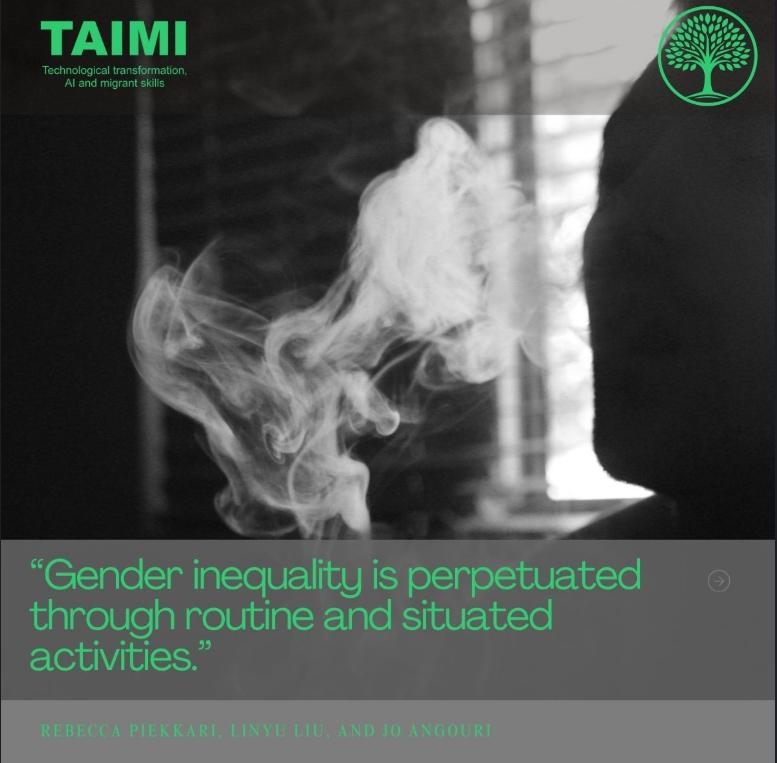
Then one woman mentioned the smoking room.
She explained that male engineers would go there with their managers several times a day. Those breaks gave them time to talk, get to know each other, and build relationships outside the formal structure of work.
The researcher had walked past the smoking room every day without giving it much thought. She had grown up seeing men smoke in China, so the scene felt completely ordinary.
But suddenly, she saw it differently.
The issue was not simply who smoked. It was who had access to informal time with managers and what could come from those relationships.
“The women felt those relationships could matter for development and even promotion,” she recalls.
That encounter changed the way she thinks about workplace opportunity. Access to career development is not always created through official training programs or formal promotion processes. Sometimes, it grows out of small, everyday interactions that are easy to overlook.
And those interactions are not necessarily equally available to everyone.
From personal experience to migrant workers in Finland
That way of looking at workplaces also shapes how she thinks about migrant workers in Finland.
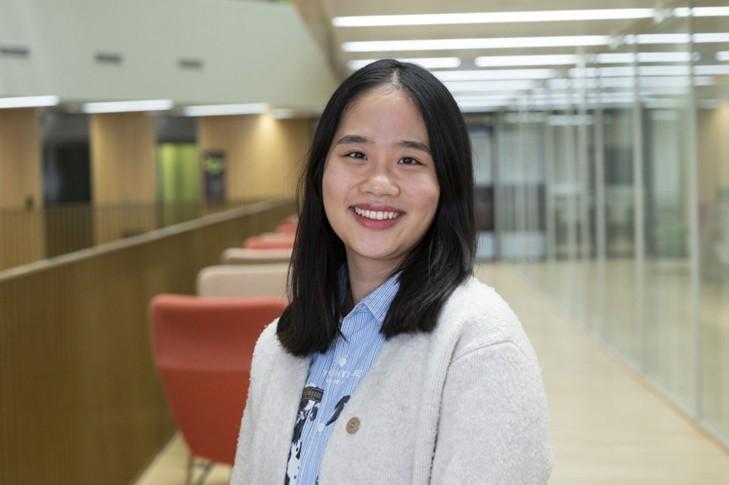
As a migrant herself, Linyu knows that having skills is not always the same as being able to use them.
She sees Finnish language skills and professional networks as two important factors that can affect whether migrant workers’ abilities are recognized. Finnish is essential for some roles, but she believes employers should be clearer about what level of language is actually required for each job.
Networks matter too.
Who knows about an opening? Who gets recommended? Who has the opportunity to explain what they can do? And whose experience becomes visible to the people making hiring decisions?
These questions matter because skills can remain invisible even when they are there.
For her, this is personal. “As a migrant in Finland myself, I care about whether people can use their skills and build a future here.”
That is also where her interest in inclusion connects with TAIMI’s broader questions about migration, skills and changing workplaces. Recognition is not only about whether someone gets a job. It is also about whether they have a genuine opportunity to grow once they are inside the organization.
Turning good intentions into everyday change
Her doctoral research looks at why companies’ social commitments do not always work out as intended in employees’ everyday lives.
TAIMI gives her an opportunity to take that question one step further.
Rather than stopping at understanding why gaps appear between what organizations intend and what employees experience, she wants to explore what companies can actually do differently, particularly as work changes and workplaces become more diverse.
“I want to take the next step and develop practical advice that companies can use,” she says.
For migrant workers, that could mean better ways of recognizing existing skills, clearer access to training, opportunities to build professional relationships, and support for learning Finnish where it is genuinely needed.
These things may sound straightforward. But, as the smoking-room example shows, opportunities are often shaped by structures and routines that people barely notice.
A workplace where skills can become visible
Her vision of a successful TAIMI is therefore quite practical.
A migrant worker should have a fair chance to demonstrate the skills they bring when applying for a job. Once hired, they should understand how to access training, build relationships, and take on new responsibilities as their work changes.
They should also be supported in learning Finnish where it is needed, rather than having language become an automatic barrier to opportunities their existing skills could otherwise make possible.
The impact would extend beyond individual workers.
“If we succeed,” her vision suggests, there would be fewer skills going unused, stronger workplaces, and more people who feel they can build a future in Finland.

That future depends partly on making visible the things workplaces have traditionally treated as ordinary or insignificant: who gets access to networks, who is included in informal conversations, whose abilities are noticed, and who gets a chance to grow.
Her own journey has taught her that inclusion is not only about opening the door.
It is also about what happens once someone is inside and whether the workplace gives them a real chance to be seen, develop their skills, and build a future.