
Inclusion Has No Finish Line
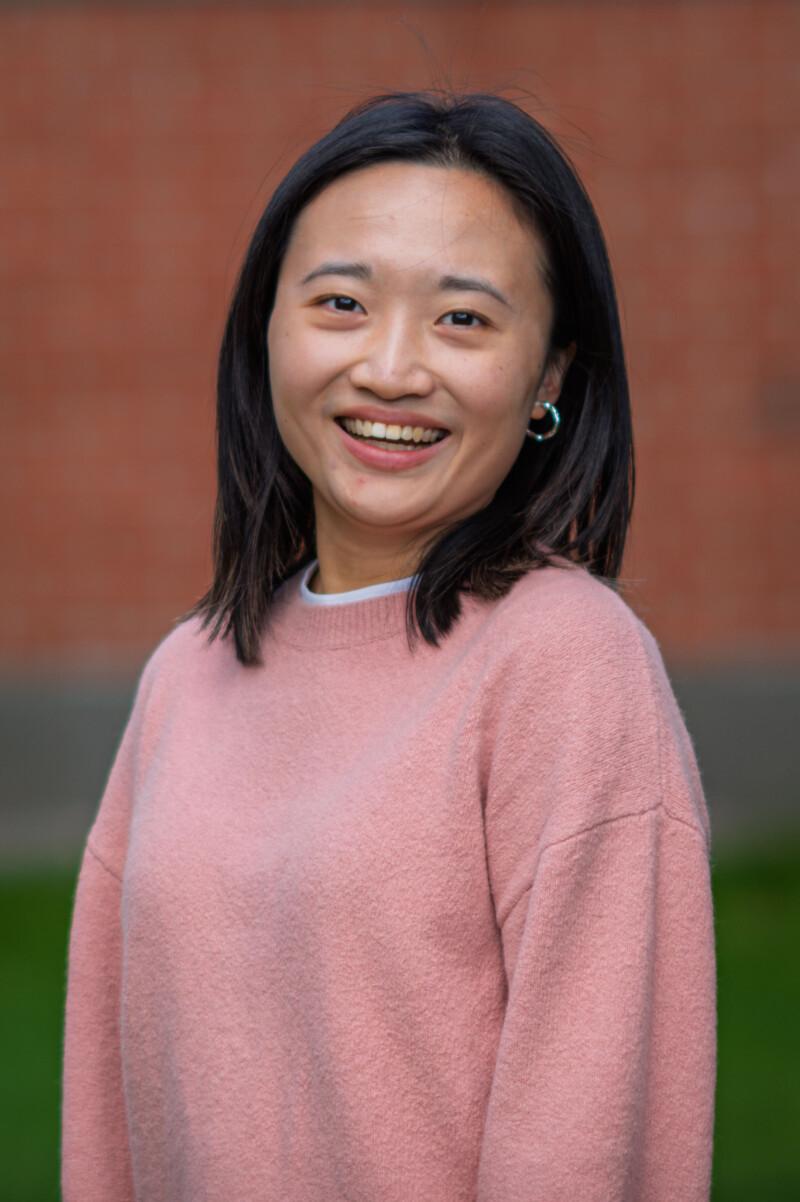
Chia-Min has spent a lot of time thinking about what it means to be included at work, partly because they have been on the receiving end of it.
Before moving to Finland, Chia-Min had lived, studied and worked in a few other countries. They had always been curious about other places and about meeting people from different backgrounds. Finland is now the place where they have lived the longest outside their home country, and building a life here has made questions about migration and inclusion feel much closer to home.
“I think it all started with my curiosity about the world in general and my interest in experiencing life in different places and meeting people from different backgrounds.”
A thesis on language at work
Chia-Min started looking at these questions properly during their master’s studies at Aalto University. Their thesis was about the language-related experiences of English-speaking employees at OP Pohjola, then OP Financial Group. Going in, they might have expected to find people who were either included or left out. The interviews showed something more mixed.
“Inclusion is often much more complex than it appears on the surface. It is not always a clear-cut distinction between being included or excluded, as people can experience both in different ways and situations.”
Learning Finnish on the job
Around the same time, Chia-Min did an internship at the City of Helsinki, where they worked on ways to support interaction in multilingual workplaces and learning Finnish at work. They were learning Finnish themselves while doing it, so they got to try out the ideas in practice.
That experience changed how they thought about inclusion. In some earlier Finnish-speaking workplaces, colleagues had switched to English whenever they spoke to Chia-Min, which was well meant. At the City of Helsinki, people encouraged and supported them to use Finnish, and Chia-Min felt more included there.
“Before this experience, I had assumed that using English as a common language was perhaps the most straightforward way to make a workplace more inclusive for international employees.”
Chia-Min is careful to say that this doesn’t work everywhere. Learning Finnish on the job isn’t always realistic, especially in certain professions, and it doesn’t answer every question about inclusion. What they took from it was a habit of questioning their own assumptions.
“Sometimes, looking at familiar challenges from a different perspective can lead to unexpected insights.”
Skills and the language they are measured in
Today, Chia-Min is a doctoral researcher, and one thing they keep coming back to is how closely competence is tied to local language skills, background and familiarity with Finnish working life. Finnish is needed in many jobs. But language requirements can also stand in the way in situations where the language isn’t really needed to do the work, and migrants who do find a job can still run into obstacles when it comes to taking part fully and moving forward in their careers.
Chia-Min is especially interested in how this differs between industries and occupations, since migrants enter the Finnish labour market under very different conditions.
“Inclusion should be about more than simply providing access to employment. It should also involve fostering conditions where people can contribute their knowledge, develop their capabilities, and have meaningful opportunities to progress long-term.”
Finding TAIMI
Chia-Min first heard about TAIMI from Professor Rebecca Piekkari, who supervised their master’s thesis and is now their doctoral supervisor. She knew what Chia-Min was interested in and thought the project might suit them. It did.
What appealed to them was the chance to look at migrants’ experiences in the Finnish labour market more broadly, and to ask how technological developments might change opportunities at work. They also like that TAIMI’s work packages cover different industries and different aspects of the same topic.
“It is fascinating to learn about the research others are doing and to see how these different perspectives can complement and inform one another.”
For Chia-Min, being part of a larger research community also means having people to think with, and the hope that the work will lead to changes outside academia too.
What would be different?
When asked what Finnish working life would look like if TAIMI succeeded, Chia-Min says it is a hard question, because they don’t see inclusion as something that is ever finished. Workplaces and societies keep changing, and so do people’s needs.
“I don’t see inclusion as something that has a finish line, where we can say that we have finally achieved it.”
They can describe what they hope for, though. In everyday working life, that means workplaces where people from different backgrounds can contribute, learn and grow, and where inclusion is a shared responsibility rather than something migrants have to work on alone. For Finnish society, it means recognising the skills of people with migrant backgrounds and being more open to different ways of working.
TAIMI’s part in that, Chia-Min says, is to help us understand the challenges and opportunities migrants face and to encourage organisations to look again at their own assumptions and practices.
“Ultimately, I think the most meaningful outcome would be for this process of learning and improvement to continue beyond the project itself.”