
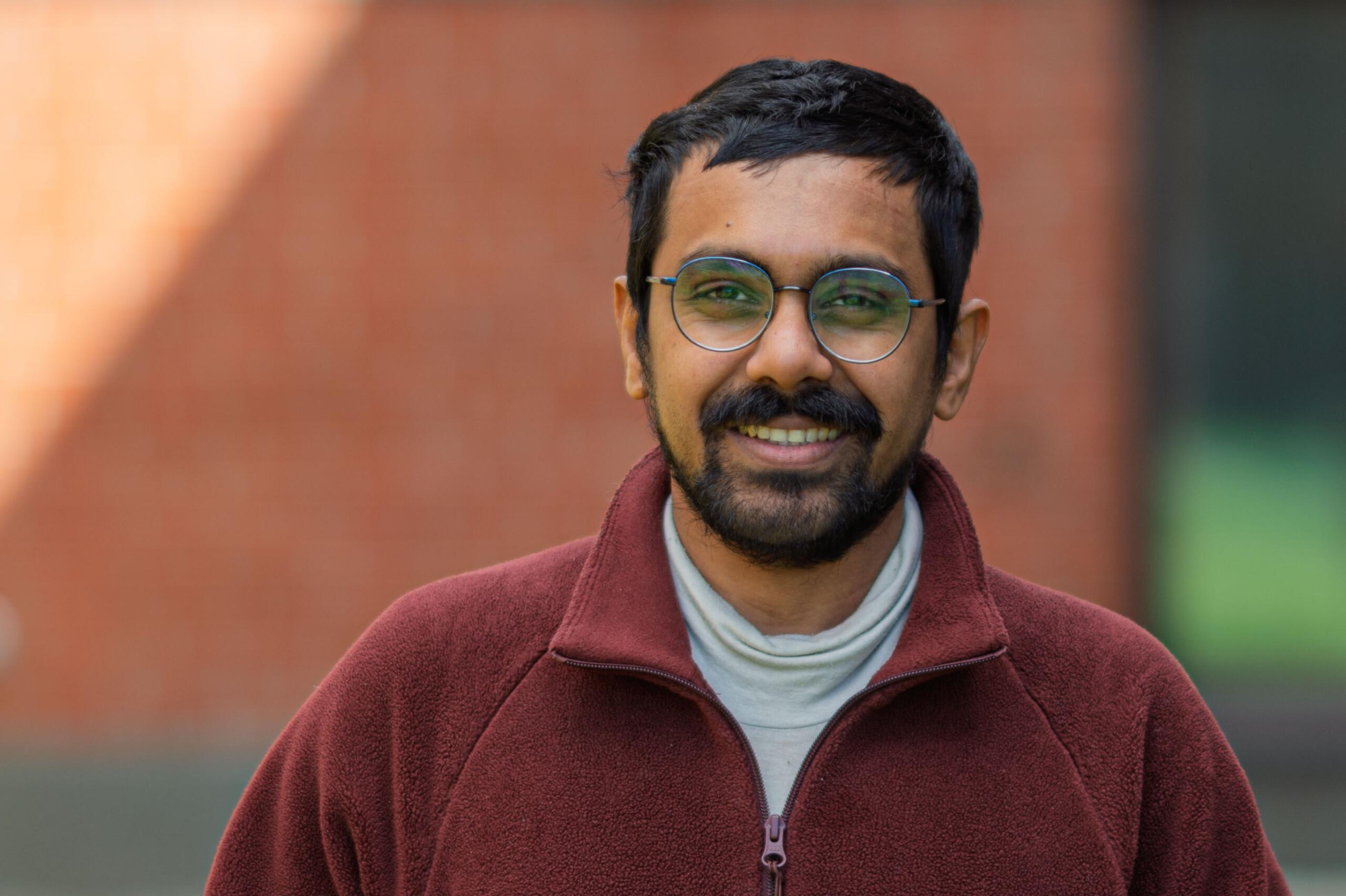
When Migration Opens Doors (and When It Doesn’t!)
At 18, Sangeeth left Kerala and moved to New Delhi to pursue a bachelor’s degree.
A few years later, he moved again, this time to Bangalore, India’s technology hub, to study development studies.
Migration, in his own life, had been a positive experience. Moving between places gave him opportunities to learn, grow, and build a professional path of his own.
But during his master’s studies, he encountered a very different side of migration.
As part of her fieldwork, he travelled to rural Bastar in central India, where he met Indigenous communities whose experiences of migration were far removed from his own. People were leaving their homes to work in construction sites and factories, often for very low wages and without basic social protections.
The contrast stayed with him.
His own migrations had opened doors. For others, migration was precarious and exploitative.
That experience shaped the direction of his career. After completing his studies, he spent seven years working with NGOs in India as a social development practitioner and researcher, focusing on migrant rights and entitlements.
The question that emerged from those experiences was simple but far from easy to answer:
How can migration become a safe, secure, and fulfilling experience for everyone?
The skills that disappear from view
Years later, that question followed him to Finland.
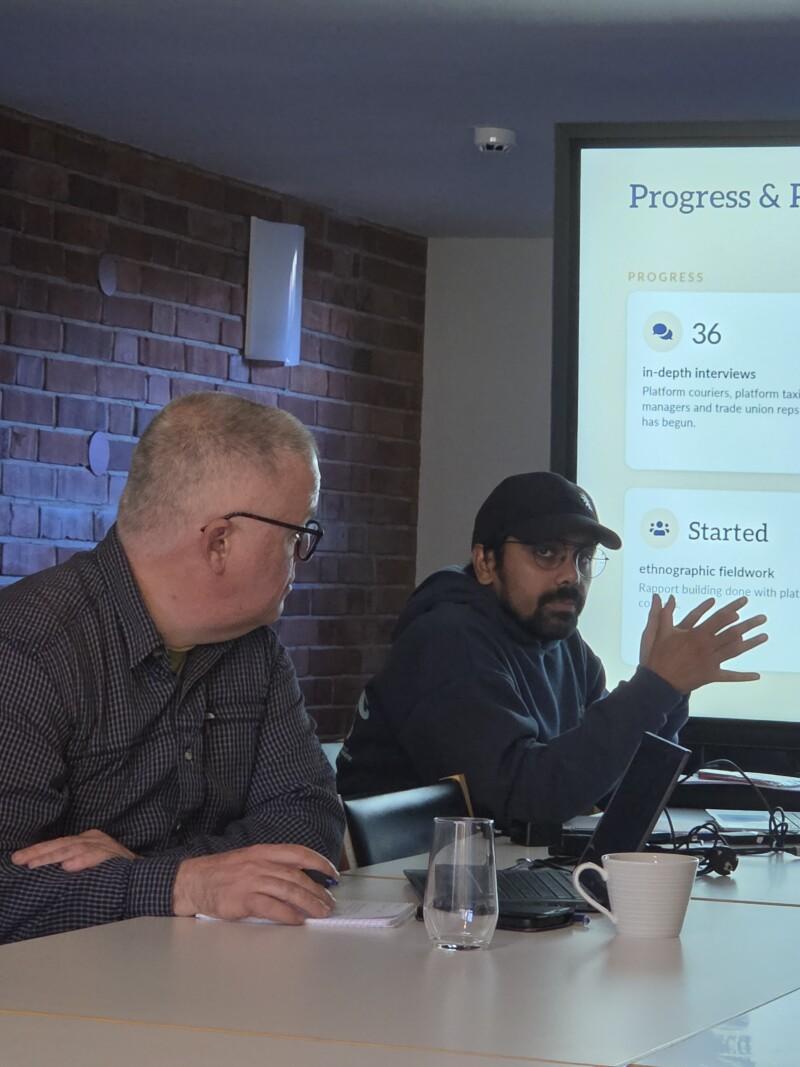
As part of TAIMI’s research, Sangeeth interviewed migrant food delivery workers and taxi drivers working in Finland’s on-demand transport sector. What she found was striking.
Many of the people he spoke to were highly educated. Some held master’s degrees; others had doctoral degrees. They had come to Finland with professional ambitions and high expectations.
Yet many were working in jobs that had little connection to the skills and expertise they had brought with them.
He describes this as “brain waste” : a situation in which a person’s capabilities exist, but the labour market is not making use of them.
The phrase captures more than a mismatch between education and employment.
When someone with years of specialized training spends years delivering food or driving a taxi, Finland loses access to skills that could otherwise contribute to its economy and society. At the same time, the individual can experience deskilling and alienation.
The longer it continues, the more difficult it can become to move back towards the professional path they originally imagined.
For Sangeeth, this is one of the most important questions raised by his work: what happens when migration brings a person to a new country, but their skills do not make the journey with them?
The structures behind the problem
There is no single reason why this happens.
- Language requirements can make it difficult for newcomers to access certain professions.
- Professional networks that help people find opportunities may take years to build.
- Educational qualifications and previous work experience may not always be formally recognized.
Together, these factors can push migrants towards particular parts of the labour market, including food delivery, taxi driving, cleaning, and care work.
These jobs are important, and they provide essential services. The issue is not the work itself.
The issue is what happens when it becomes the only realistic option for someone whose skills could be used elsewhere.
For Sangeeth, the issue is personal as well as professional. As an international migrant himself, he understands some of the challenges involved in building a life and career in a new country.
He also sees migrant inclusion as something that benefits Finland as a whole. Better systems could help migrants realize their capabilities while contributing to economic growth and innovation.
What happens when technology becomes the workplace?
His interest in platform work began before he came to Finland.
During his years working in India, he watched food delivery and ride-sharing platforms become major sources of employment for internal migrants. He also saw how technology could introduce new forms of control into working life: from arbitrary pay cuts and account deactivation to weak or unresponsive grievance mechanisms.
Those experiences eventually led him towards research.
TAIMI gave him the opportunity to explore the same broader questions in a very different environment.
Finland has strong labour market institutions and a long tradition of social dialogue. Platform work therefore raises an interesting tension: what happens when new forms of technologically mediated work enter a labour market with established systems of worker protection?
And what can Finland learn from experiences elsewhere?
For Sangeeth, bringing these perspectives together is an important part of TAIMI. Platform work is not uniquely Finnish. The context may be different, but workers in Finland and India can still encounter similar challenges.
Her research therefore also brings a perspective from the Global South into Finnish conversations about technology, work and migration.
A platform job should not become the end of the story
One of the clearest ways to understand his vision for TAIMI is through a person he has encountered in his research.
Imagine a food delivery worker in Finland who has a master’s degree in engineering.
Today, that qualification may have little influence on their working life. They may not know how the platform’s algorithm makes decisions, and if their account is suspended or deactivated, they may have limited ways to challenge it.
A more inclusive system could look very different.
Algorithms could be more transparent. Workers could have meaningful ways to challenge decisions. Their educational background could be documented and assessed, and that information could connect them with opportunities: perhaps workplace-based language training, further support, or pathways towards establishing their own business.
Even seemingly small changes could matter. Rest lounges for delivery workers, for example, could make the working day safer and more humane.
The larger idea is that platform work should be “an initial chapter in their journey in Finland, rather than its endpoint.”
That distinction matters. Because the goal is not simply to make existing jobs better, although that matters too. It is to create pathways that allow people to move from the work they can access today towards the work they are capable of doing.
Building a different kind of future
Finland is facing an aging population and labour shortages across many sectors. Leaving skilled people at the margins of the labour market is therefore not only an issue of individual opportunity. It is also a question of what kind of economy and society Finland wants to build.
For Sangeeth, the answer involves recognizing migrants not as a source of labour alone, but as skilled people with knowledge, experience, and ambitions.
That is also why TAIMI matters to her.
Having seen how platforms can grow without adequate safeguards, she sees an opportunity for Finland to approach technological change differently: to build systems where innovation does not have to come at the expense of decent work.
“Technological change and decent work can go hand in hand.”
It is a deceptively simple idea.
But behind it is a much bigger ambition: a Finnish labour market where migration does not mean leaving your professional identity behind, where technology expands opportunities rather than narrowing them, and where the skills people bring with them are treated as something to build on, not something to overlook.