
Wanying Nicole Yan Participates in AI Ethics and Social Welfare Hackathon in Spain
22–24 July 2026 | San Lorenzo de El Escorial, Spain
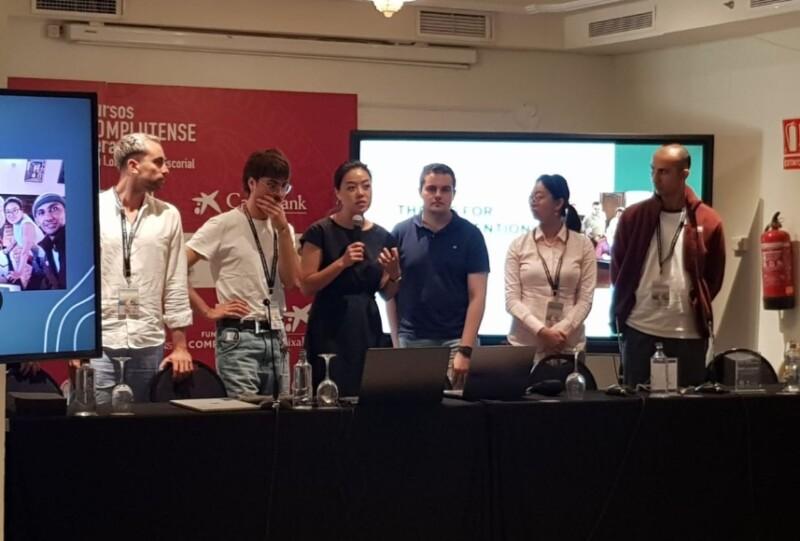
Our researcher Wanying Nicole Yan participated in the AI Ethics and Social Welfare Hackathon, held from 22 to 24 July 2026 in San Lorenzo de El Escorial, Spain. The event brought together early-career researchers from different disciplinary and cultural backgrounds to examine how artificial intelligence can be developed and governed responsibly in the context of social welfare.
Working in a multidisciplinary team spanning computer science, law, and philosophy, Yan contributed to a project exploring approaches to making AI systems more transparent, accountable, and equitable.
As part of the hackathon, the team re-trained a U.S.-based algorithmic risk assessment model using historical criminal justice data. Drawing on EU AI governance frameworks and ethical AI principles, the researchers assessed algorithmic fairness and examined potential disparities in prediction outcomes across different demographic groups.
Looking beyond technical fairness
A central lesson from the project was the importance of critically examining the data on which AI systems are built. Data are not neutral: they can reflect historical decisions, institutional practices, social structures, and the assumptions of those involved in collecting, selecting, and modelling them. As a result, inequalities present in historical data can also become embedded in algorithmic systems.
At the same time, analysing data can help reveal how societies are changing. Shifts resulting from education, policy reform, greater diversity, and evolving social norms can all become visible through the patterns captured in data.
The hackathon also highlighted that developing a technically “fairer” model is only one part of responsible AI. The impact of an AI system ultimately depends on how it is governed, supervised, adopted, and incorporated into human decision-making. Effective AI governance therefore requires technological development, ethical principles, institutional processes, and human judgment to evolve together.
From this perspective, responsible AI raises questions that extend beyond predictive performance: How should algorithms be governed so that they do not simply reproduce patterns from the past, but also reflect the values and societies we hope to build?
The value of interdisciplinary collaboration
Another important aspect of the hackathon was its multidisciplinary approach. Bringing together researchers with expertise in technology, law, philosophy, and related fields created opportunities to examine the same challenges from different perspectives.
Reflecting on the experience, Yan particularly valued how quickly the group established trust and developed a shared way of working despite differences in disciplinary and cultural backgrounds. This collaborative environment enabled participants to challenge assumptions, combine expertise, and consider both the technical and societal dimensions of responsible AI.
The experience reinforced a broader principle at the heart of AI ethics: responsible innovation is not solely about improving the predictive capabilities of models. It is also about ensuring that technological innovation, governance, and human judgment develop together so that AI systems remain aligned with the values of the societies they are intended to serve.
The AI Ethics and Social Welfare Hackathon was supported by Una Europa, Bosch, and Universidad Complutense de Madrid.